top of page

Research & EVidence

This 2011 study investigates how structured storytelling practices can strengthen relationships and foster cohesion in a culturally diverse New Zealand secondary classroom. Baskerville examines the impact of deliberately implemented storytelling processes that invite students to share personal and cultural narratives within a safe, guided environment.

The research found that storytelling supported empathy, compassion, tolerance, and respect for difference. Students developed deeper understanding of themselves and others, particularly across cultural boundaries. The process also surfaced unexpected benefits, including increased confidence, enhanced self-awareness, and improved peer relationships. Storytelling became a vehicle for voice, allowing students to articulate identity and lived experience in ways that traditional classroom structures did not always enable.
Importantly, the study highlights that storytelling is most powerful when intentionally facilitated by skilled teachers who create relational trust and structure reflective dialogue. It is not incidental conversation, but purposeful pedagogical design that builds inclusive classroom communities.

For the Telling Your Stories Project, this research provides strong evidence that storytelling can be a transformative relational practice. It affirms that culturally grounded narrative approaches foster belonging, strengthen intercultural understanding, and support inclusive, cohesive learning environments aligned with the project's vision.

Developing cohesion and building positive relationships through storytelling in a culturally diverse New Zealand classroom

Structured storytelling in multicultural classrooms: strengthening belonging, empathy, and peer relationships through intentional pedagogy.

Read More
Storytelling has long served as a foundational educational practice across cultures, transmitting knowledge, values, history, and identity long before the written word. Contemporary scholarship affirms that storytelling remains a powerful pedagogical approach because it enables learners to construct meaning rather than simply receive information.

This research highlights that storytelling fosters imagination, empathy, relational connection, and shared knowledge creation. Unlike didactic instruction, stories invite interpretation, allowing learners to connect content to their own experiences and cultural contexts. This openness supports deeper understanding, critical thinking, and emotional engagement.

The chapter identifies four defining principles of storytelling pedagogy:
- Relationality – storytelling builds community and strengthens teacher–learner connections.
- Responsiveness – stories are shaped in dialogue with audiences, making learning adaptive and culturally situated.
- Empathetic imagination – storytelling nurtures perspective-taking and understanding of human complexity.
- Knowledge creation – meaning emerges collaboratively through shared interpretation.

Together, these principles position storytelling not as an occasional classroom strategy, but as a coherent pedagogical framework capable of shaping curriculum, strengthening identity, revitalising language, and fostering intercultural understanding.
For the Telling Your Stories Project, this work provides a strong theoretical and practical foundation for embedding relational, imaginative, and culturally responsive storytelling practices at the heart of teaching and learning.

The What, How and Why of Storytelling Pedagogy

Storytelling pedagogy as a relational framework for empathy, intercultural understanding, and collaborative knowledge creation in education.

Read More
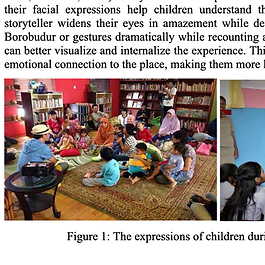
White et al. (2025) provide compelling, practice-based evidence for the power of story sharing in diverse, equity-funded early childhood settings. Drawing on research in culturally and linguistically rich kindergartens, the report demonstrates how intentional storytelling practices support early literacy development, oral language growth, identity affirmation, and a strong sense of belonging. The authors highlight the importance of multimodal expression, culturally responsive pedagogy, and relational teaching in strengthening both engagement and learning outcomes.

For the Telling Your Stories Project in Australia, this research offers timely and regionally relevant validation. It shows that structured, inclusive story-sharing practices are not simply enrichment activities, but foundational literacy work that builds voice, agency, and equitable participation in early learning environments. The report provides both theoretical grounding and practical insight to support implementation, advocacy, and scaling of culturally grounded storytelling approaches across diverse Australian contexts.

Strengthening early literacy practice: Exploring story sharing in diverse, equity-funded kindergartens

White et al. (2025) provide strong evidence that intentional story sharing in culturally and linguistically diverse kindergartens strengthens early literacy, oral language, identity, and belonging. Their research shows that multimodal, relational, and culturally responsive storytelling practices enhance engagement and equitable participation in early learning settings.
Read More
This article explores how storytelling served as a foundational way of teaching and learning long before formal educational institutions and printed texts emerged. Lawrence and Paige argue that the oral traditions of many cultures transmitted deep cultural knowledge, values, histories, and practical wisdom across generations. Because the stories of Indigenous and oral cultures were rarely written down, they have often been marginalised in mainstream educational narratives, yet these stories sustained cultural continuity and identity through their intergenerational retelling. 

The authors emphasise that storytelling is not merely entertainment but a meaningful pedagogical practice that embeds learning in relational experience, memory, and cultural worldview. Stories offer opportunities for reflection, personal connection, and healing, challenging dominant discourses that privilege Western-centric ways of knowing while validating Indigenous and oral knowledge systems.

For the Telling Your Stories Project, this article provides strong research support for positioning storytelling as a central teaching and learning practice. It affirms that narrative practices rooted in lived experience and cultural tradition can deepen engagement, foster identity and belonging, and support learning that is relational, culturally grounded, and transformative.

What Our Ancestors Knew: Teaching and Learning Through Storytelling.

This article highlights storytelling as an ancient, relational pedagogy that has sustained cultural knowledge, identity, and worldview across generations, particularly within Indigenous and oral traditions often marginalised in mainstream education. For the Telling Your Stories Project in Australia, it provides strong theoretical support for centring culturally grounded narrative practices as transformative approaches that deepen engagement, affirm identity, and foster belonging.

Read More
This chapter highlights the central place of storytelling in young children’s learning, identity formation, and cultural belonging. It emphasises that for Indigenous communities, stories are not simply narratives to be enjoyed but living carriers of history, language, values, and ancestral knowledge. Through storytelling, cultural continuity is sustained and young people are connected to their heritage in meaningful and embodied ways.

The chapter suggests that when educators intentionally design learning around stories, they create powerful conditions for development. Story-based pedagogy strengthens imagination, language growth, social understanding, and emotional insight. For Indigenous children in particular, storytelling affirms identity, validates cultural knowledge systems, and supports a sense of belonging within both school and community contexts.

While storytelling benefits learners of all ages, it is especially significant in early childhood, when children are forming foundational understandings of who they are and how they relate to others and to place. Stories help young learners make sense of the world, understand cultural perspectives, and locate themselves within broader social and historical narratives.

For the Telling Your Stories Project, this chapter reinforces the importance of positioning storytelling as a core pedagogical approach rather than an occasional classroom activity. It affirms that grounding learning in culturally meaningful stories can strengthen identity, deepen engagement, and support holistic development. It also underscores the responsibility of educators to honour stories as vehicles of cultural continuity, ensuring that teaching practices contribute to sustaining and valuing community knowledge across generations.

The importance of storytelling as a pedagogical tool for indigenous children

This chapter affirms storytelling as a vital pedagogical practice in early childhood, particularly within Indigenous communities where stories sustain cultural knowledge, identity, language, and belonging across generations. For the Telling Your Stories Project in Australia, it reinforces the importance of embedding culturally meaningful storytelling as a core teaching approach to strengthen identity, engagement, and holistic development.
Read More
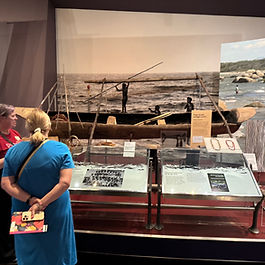
This 2022 doctoral thesis by Benjamin Bruce Wilson develops a richly grounded place-based pedagogy rooted in Indigenous ways of knowing, being, and doing. Drawing on a methodological paradigm called Narrative Ecography, Wilson foregrounds Indigenous approaches to learning that centre deep relational connection to Country and the stories that arise from those connections. He argues that Indigenous pedagogies, which have sustained Indigenous societies for tens of thousands of years, offer powerful insights for contemporary education—particularly for nurturing respect, care, responsibility, and ecological stewardship in learners. 

In Stories for Country, place is not simply a backdrop for learning but an active teacher. Students are invited to explore their own stories of connection to local places, histories, landscapes, and Earth-kin, and through this exploration they develop a sense of obligation and reciprocity toward the world they inhabit. Wilson’s framework positions storytelling and Country-centred narrative practice as core pedagogical tools capable of fostering reciprocal relationships between learners and environment, disrupting conventional, abstract, disconnected forms of schooling. 

For the Telling Your Stories Project, this thesis offers a robust, research-based foundation for weaving Indigenous, place-based narrative practices into pedagogy. It affirms the value of culturally grounded storytelling that honours relationality with place and community, supports learners’ sense of belonging, and encourages responsibility and care for the ecological and cultural worlds they inhabit.

Stories for Country: Developing a Place-Based Pedagogy Based on Indigenous Ways of Knowing

Wilson’s (2022) doctoral thesis presents a place-based pedagogy grounded in Indigenous ways of knowing, positioning storytelling and deep connection to Country as central to fostering responsibility, reciprocity, and ecological care. For the Telling Your Stories Project in Australia, it provides a strong research foundation for embedding Country-centred, culturally grounded narrative practices that strengthen belonging and relational learning.
Read More
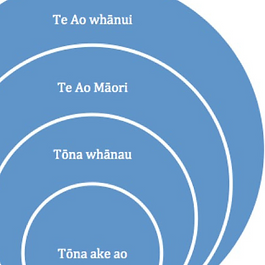
This 2018 AlterNative article provides strong theoretical and cultural grounding for narrative work within Aotearoa. It positions Kaupapa Kōrero as a distinctly Māori approach to narrative inquiry, centering Māori worldviews, relational ethics, language, history, and lived experience within research and storytelling practice.

The authors affirm that storytelling is not simply a method of gathering information, but a culturally embedded, relational process that honours whakapapa, collective identity, and community accountability. The article highlights how narrative inquiry, when shaped by kaupapa Māori principles, becomes a vehicle for restoring voice, strengthening cohesion, and challenging dominant Western research paradigms.

For the Telling Your Stories Project, this work offers both philosophical validation and methodological clarity. It reinforces the importance of culturally grounded, relational storytelling practices that uplift identity and community connection. It provides a powerful research-based foundation for advocating narrative-based learning approaches that are inclusive, transformative, and responsive to the cultural context of Aotearoa.

​​Kaupapa Kōrero: A maori cultural approach to narrative inquiry

This 2018 AlterNative article grounds narrative practice in Kaupapa Kōrero, a distinctly Māori approach that centres whakapapa, relational ethics, collective identity, and community accountability within storytelling and research. For the Telling Your Stories Project, it provides strong philosophical and methodological support for culturally grounded, relational narrative practices that restore voice, strengthen cohesion, and challenge dominant Western paradigms in education.

Read More
In How Stories Change Us, developmental psychologist Elaine Reese synthesises leading scientific research on the ways stories shape human development across the lifespan. Drawing on decades of work—including her longitudinal Origins of Memory study—Reese shows that stories from both fiction and real life engage fundamental brain processes involved in memory, imagination, social understanding and identity formation. Stories from books, film, television and games can promote empathy, perspective-taking and prosocial behaviour, while real-life stories contribute to mental and physical wellbeing and help individuals make sense of their lives.

Reese also explores the benefits and risks of different story forms, noting that violent or stereotyped narratives can reinforce prejudice and that misleading real-world stories (such as misinformation) can distort memory and judgement. Her developmental lens highlights how story engagement begins in early childhood and continues to influence thought and behaviour into old age, offering insights into how educators, parents and communities can foster healthier narrative environments.

For the Telling Your Stories Project, this book provides robust, evidence-based grounding for the central premise that stories are formative forces in learning, identity, and relational development. It affirms that thoughtfully selected and facilitated storytelling practices can enhance wellbeing, deepen understanding, and support social and cognitive growth across diverse contexts.

How Stories Change Us:A Developmental Science of Stories from Fiction and Real Life

In How Stories Change Us, Elaine Reese synthesises decades of developmental research to show that stories—both fictional and real—shape memory, empathy, identity, and wellbeing across the lifespan, while also carrying risks when narratives reinforce harm or misinformation. For the Telling Your Stories Project, the book offers strong scientific validation that carefully facilitated storytelling can positively influence learning, social understanding, and relational development in diverse educational contexts.

Read More
This edited volume offers a powerful decolonising framework for research grounded in Indigenous ways of knowing and storywork. Drawing on contributions from Indigenous scholars across Aotearoa New Zealand, Canada, and Australia, it reframes research not as a neutral, Western-centric activity, but as a relational and culturally embedded practice that honours Indigenous worldviews, protocols, and narrative forms. Central to the book is the concept of Indigenous storywork, which positions stories as living pedagogical and methodological tools that carry cultural values, ethics, and knowledge systems rather than simply data to be extracted.

The book asserts that decolonising research involves more than critiquing colonial legacies. It requires actively foregrounding Indigenous epistemologies, methodologies, and relational ethics, including the ways stories affirm identity, community, and self-determination. Across the chapters, contributors explore how Indigenous storywork supports education, law, gender discourse, and cultural sustainability, showcasing both philosophical grounding and practical approaches for re-centering Indigenous voices in scholarship.

For the Telling Your Stories Project,  this work provides a rich theoretical and cultural foundation for narrative and storytelling practices that are culturally grounded, relational, and transformative. It offers strong justification and conceptual tools to support decolonial, inclusive, and community-responsive pedagogies aligned with your goals.

Decolonizing Research Indigenous

This edited volume advances a decolonising research framework grounded in Indigenous storywork, positioning stories as living, relational carriers of cultural knowledge, ethics, and identity rather than neutral data. For the Telling Your Stories Project, it offers a strong theoretical and cultural foundation for embedding Indigenous, community-responsive storytelling practices that are inclusive, relational, and transformative in educational contexts.

Read More
In Storycatcher, author and educator Anne Hynes explores how storytelling can help individuals make sense of their lives, relationships, and personal growth. Hynes blends practical guidance with reflective insight to show how stories both shape and reveal our inner worlds. She highlights the ways that personal narratives carry emotional truth, connect us to others, and support healing and transformation when they are listened to deeply and respectfully.

The book discusses techniques for storycatching—the practice of respectfully hearing, gathering, and retelling stories so that meaning and insight are honoured rather than distorted. Hynes emphasises that listening well is as important as telling; deep listening can give voice to experiences that might otherwise remain unnamed or misunderstood. She also explores how stories link identity, memory, and culture, and how engaging with narrative practice can support wellbeing and self-understanding across the lifespan.

For the Telling Your Stories Project, this book provides both philosophical grounding and practical insight into how stories can be used to nurture meaning, connection, and reflective learning. It affirms that storytelling is not just a way to communicate facts but a relational practice that supports identity, empathy, and personal growth.

Storycatcher: Making Sense of Our Lives Through the Power and Practice of Story.

In Storycatcher, Anne Hynes explores storytelling as a relational practice that supports meaning-making, identity formation, healing, and personal growth, emphasising the importance of deep listening alongside telling. For the Telling Your Stories Project, the book offers practical and philosophical grounding for nurturing reflective, respectful narrative practices that strengthen connection, empathy, and wellbeing in learning communities.

Read More
This 2005 Social Education article provides compelling support for storytelling as a powerful and intellectually rigorous approach to teaching history. Sanchez and Mills argue that viewing history as story, rather than as a collection of isolated facts, creates coherence, meaning, and deeper engagement for learners. They suggest that storytelling offers a unifying structure with clear beginnings, tensions, and resolutions, allowing students to better grasp complexity, causation, and change over time.
The authors highlight that storytelling is not a simplistic retelling of events. Instead, it is a deliberate pedagogical strategy that helps students connect with historical figures as human actors shaped by context, consequence, and moral tension. By organising historical content narratively, teachers can foster stronger critical thinking, empathy, and conceptual understanding than through conventional lecture or textbook-driven instruction.
For Coactive Education, this article offers strong pedagogical validation for narrative-based learning. It affirms that storytelling enhances engagement, deepens comprehension, and supports relational, meaning-rich learning experiences. It reinforces the idea that when educators are equipped with the skill and confidence to teach through story, learning becomes more coherent, inclusive, and transformative

Telling Tales: the teaching of American history through Storytelling

This 2005 Social Education article argues that teaching history through structured storytelling fosters coherence, critical thinking, and deeper engagement by helping students understand complexity, causation, and human experience over time. For the Telling Your Stories Project, it provides strong pedagogical support for narrative-based learning as a rigorous, meaning-rich approach that enhances empathy, comprehension, and inclusive classroom practice.

Read More
This article outlines a compelling vision for early childhood education in Aotearoa that integrates social, cultural, and ecological justice within the context of the Anthropocene, the current era marked by profound human impact on the Earth’s systems. The author argues that educators have a deep ethical responsibility to protect and enhance the wellbeing of children, whānau, communities, and the more-than-human world in which we all live. 

Ritchie draws on examples from New Zealand to show how early childhood pedagogies can be shaped by critical pedagogies of place and local traditional knowledges. These pedagogies strengthen learners’ empathy, care, and connectedness not only with other people but also with the natural environment. The article highlights the importance of grounding teaching and learning in local contexts, valuing Māori worldviews, and fostering dispositions that affirm both cultural identity and ecological sustainability. 

For the Telling Your Stories Project, this work provides a strong, research-based rationale for embedding justice-oriented, place-based, and culturally responsive narrative and learning practices. It affirms that early education can and should cultivate relational awareness, ecological responsibility, and a sense of collective stewardship that aligns with values of inclusion, cultural respect, and sustainability

Social, cultural and ecological justice in the age of the Anthropocene: A New Zealand early childhood car and education perspective

This article presents a justice-oriented vision for early childhood education in the Anthropocene, advocating for place-based, culturally grounded pedagogies that nurture empathy, ecological responsibility, and respect for Māori worldviews. For the Telling Your Stories Project, it offers strong research support for embedding narrative practices that cultivate relational awareness, cultural identity, and collective stewardship in diverse learning communities.

Read More
In Time and the Art of Māori Storytelling, Dame Joan Metge explores the distinctive ways in which Māori narratives understand and enact time, history, and relational meaning. Metge challenges Western assumptions about chronology and historical “accuracy,” showing that what some scholars once saw as inconsistencies in Māori accounts across generations are instead part of a rich oral tradition shaped by purpose, memory, and cultural conventions. Māori storytelling is portrayed as dynamic and adaptive, with myths and ancestral narratives continually relevant because they are retold, reorganised, and re-situated in the present moment. 

Metge highlights that Māori approaches to time and narrative foreground relational depth, collective memory, and ongoing social relevance rather than linear sequencing alone. Myths and stories are never “out of date”; they evolve with their telling, carrying foundational cultural values, mediating contemporary concerns, and providing frameworks for understanding identity, place, and history. 

For the Telling Your Stories Project this article offers a culturally grounded perspective on narrative that enriches storytelling practices. It validates non-Western temporalities and relational meaning-making as pedagogically powerful, supports narrative as a living cultural practice, and affirms storytelling as a way of anchoring learning in both ancestral wisdom and present-day relevance.

Time and the Art of Māori Storytelling

In Time and the Art of Māori Storytelling, Dame Joan Metge illustrates how Māori narratives enact dynamic, relational understandings of time, identity, and history, challenging linear Western notions of chronology and accuracy. For the Telling Your Stories Project, the article affirms storytelling as a living cultural practice that anchors learning in ancestral wisdom while remaining responsive and relevant to present-day contexts.

Read More
This book explores how storytelling can be intentionally used as a core teaching and learning strategy in higher education. McDrury and Alterio argue that when storytelling is formalised and structured within educational contexts, it captures real-world experiences and turns them into meaningful learning opportunities that deepen understanding, foster reflection, and stimulate critical thinking. The authors show how storytelling helps students articulate and examine their own lived experiences, connect theory with practice, and engage more fully with content through reflection and dialogue. 

The book outlines different models of storytelling, explains how to create productive storytelling practices in tutorials and group settings, and discusses ethical and assessment considerations for educators. Storytelling is presented not merely as sharing anecdotes, but as a deliberate pedagogical device that supports reflective learning, honours diverse cultural and emotional experiences, and builds a “storytelling culture” within learning environments. 

For the Telling Your Stories Project, this work provides strong theoretical and practical grounding for narrative pedagogies in formal learning contexts. It affirms that storytelling can make learning more relational, reflective, and personally meaningful, helping learners to connect intellectually and emotionally with content while developing deeper insight and critical awareness. It has particular relevance to teacher educational contexts and support the integration of narrative practice into learning spaces.

Learning Through Storytelling in Higher Education: Using Reflection and Experience to Improve Learning.

McDrury and Alterio demonstrate how structured storytelling in higher education can transform lived experience into reflective, critical, and theory-connected learning, positioning narrative as a deliberate and ethically grounded pedagogical strategy. For the Telling Your Stories Project, the book offers practical and theoretical support for embedding storytelling as a relational, reflective approach that deepens insight and builds meaningful learning cultures across educational contexts.

Read More
bottom of page